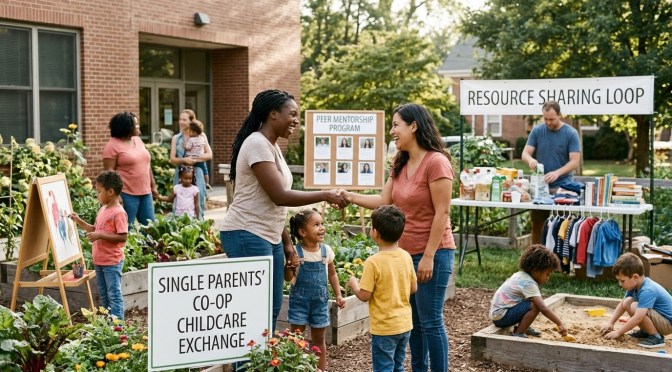
Single parenthood is an incredibly rewarding journey, but it comes with unique, non-stop demands. Balancing a career, household management, finances, and day-to-day parenting entirely on your own often leads to two major hurdles: time poverty and social isolation.
While traditional support structures rely on multi-generational families or dual-income households, single parents around the country are pioneering a powerful solution: peer-to-peer (P2P) mutual aid networks.
By pooling resources, exchanging labor, and creating structured community systems, single parents are dramatically lowering living costs, reclaiming precious personal time, and forging meaningful, lifelong connections. Here is an in-depth guide on how single parents are helping single parents—and how you can bring these actionable strategies to your own neighborhood.
1. Co-Op Childcare Models: Swapping Labor, Not Dollars
Childcare is consistently one of the single largest logistical and financial pressures solo parents face. Childcare cooperatives replace expensive cash transactions with direct, trust-based labor exchanges.
* Time-Bank Systems: Parents earn credits or hours by watching other members’ children, which they can later redeem for personal, study, or work time. One hour of care equals one hour of credit, keeping the arrangement fair and equitable regardless of income level.
* Reciprocal Weekend or Evening Swaps: Two or three local single parents coordinate their schedules. Parent A hosts all the kids on Friday evening so Parent B can run errands or recharge, and the roles reverse on Saturday.
* Emergency Backup Networks: A tight-knit circle of pre-approved parents within a 10-minute radius who agree to step in during last-minute emergencies, sudden sick days, or unexpected work overtime.
How to start: Host an initial meet-and-greet at a local park so kids and parents can connect naturally. Establish clear, written ground rules covering household expectations, allergies, discipline, and emergency contacts before scheduling your first swap.
2. Resource Sharing & Bulk Purchasing Loops
Single-parent households often miss out on the financial perks of bulk buying. Resource-sharing networks bring those economies of scale back into single-parent budgets.
[ Single Parent Support Hub ]
│
┌────────────────┼────────────────┐
▼ ▼ ▼
Childcare Bulk Goods Tool & Gear
Swaps Co-ops Libraries
* Bulk Grocery Pools: Pool funds with two or three other families to buy household staples, school snacks, or paper goods at wholesale clubs, then split the items and costs evenly.
* Seasonal Clothing & Gear Loops: Organize quarterly clothing swaps categorized by children’s sizes. Expensive seasonal gear like winter coats, snow boots, and sports equipment gets passed down to younger kids rather than repurchased every year.
* Tool & Appliance Libraries: Share high-value, infrequently used equipment such as carpet cleaners, power tools, lawn mowers, or camping gear across your network.
3. Peer Mentorship & Emotional Infrastructure
Decision fatigue and emotional burnout are real challenges when you carry the full weight of parenting alone. Structured peer mentorship offers both practical guidance and a grounded emotional anchor.
* Experienced-to-New Parent Pairing: Match newly single parents with veterans of the journey who can share hard-won wisdom on budgeting, legal logistics, co-parenting boundaries, and local resources.
* Focused Mastermind Groups: Form small peer groups that meet bi-weekly (in person or virtually) to discuss specific personal goals like career advancement, going back to school, or stress management.
* Shared Social Anchors: Plan group park outings, casual potlucks, and holiday gatherings. This gives parents a chance to relax with adult peers while kids play together, eliminating the isolation that can sometimes come with solo parenting weekends.
4. 4 Steps to Launching Your Local Network
Starting a grassroots support system requires minimal overhead, just clear communication and a little structure:
* Establish a Digital Hub: Create a private local group on Facebook, WhatsApp, or Nextdoor, keeping the membership geographically close (e.g., within your town or neighborhood).
* Draft Ground Rules: Set simple expectations regarding privacy, reliability, safety, and mutual respect to ensure a welcoming, judgment-free space.
* Host Your First Gathering: Organize a low-pressure meetup at a public park or library community room. Let the kids play while parents share their biggest daily pain points.
* Pilot One Program First: Start small—such as launching a weekend childcare swap loop—to build trust and momentum before expanding into bulk buying or formal mentoring.
> Join the Community!
> Looking to connect with like-minded parents, trade advice, and build lasting support systems in an independent space? Don’t forget to join our independent social media platform at sphsp.com!
>
Hashtags
#SingleParentSupport #CoOpChildcare #SingleParentsHelpingSingleParents #SoloParenting #MutualAid #CommunitySupport #ParentingCoOp #SingleMomLife #SingleDadLife #ResourceSharing #ParentingCommunity #ItTakesAVillage #SPHSP